Is your cosmetic penile implant causing pain, regret, or dysfunction instead of restoring your confidence?
You’re not alone—and you don’t have to live with the disappointments of a procedure that didn’t go as planned.
Dr. Mark Solomon is a nationally recognized expert in penile implant revision surgery. Over the course of his career, he has helped countless men regain their confidence, comfort, and sexual function after a failed implant procedure.
Here’s why many men turn to Dr. Solomon for revision surgery:
- 30+ years of experience in male enhancement surgery
- Performed hundreds of penile revision procedures with a high success rate
- One of the few surgeons worldwide experienced in correcting complications from subcutaneous silicone penile implants
- Double-board-certified by the American Board of Plastic Surgery and the American Board of Surgery
- 35+ peer-reviewed publications in leading medical journals
We understand—the idea of going through another surgery can feel overwhelming. Maybe you’ve already spent much time, money, and emotional energy on the first operation.
Perhaps a part of you still wants to fix what went wrong, but fears making it worse.
And after everything you’ve been through, even scheduling a new consultation might feel like too much.
These are real, valid concerns. And they deserve real solutions.
That’s where Dr. Solomon comes in.
As a world-renowned surgeon in the field of male enhancement, he provides:
- Expert, individualized care that addresses your unique concerns
- Meticulous revision surgery, including revision of cosmetic penile implants with precision, while prioritizing both appearance and function
- A judgment-free space where you’re heard, supported, and never rushed
- A strong emphasis on safety and clear communication, from consultation to recovery
From Philadelphia to Beverly Hills, Dr. Solomon has helped men just like you reclaim their bodies—and their peace of mind.
If you’re ready to explore your options, we’re here to help.
Call us at (310) 299-3553 to schedule a confidential virtual or in-person consultation at our Beverly Hills clinic.
You don’t have to settle for the outcome you were given. The path to feeling whole again can start today.
What Is Penile Implant Revision Surgery?
Penile implant revision surgery, also known as penile prosthesis revision surgery, removes, replaces, or repairs a previously placed penile implant due to complications or dissatisfaction.
This procedure aims to restore function, improve appearance, and rebuild confidence.
While the general goals of a revision procedure seem straightforward, the surgery itself can be complicated.
One reason for this complexity is that penile implants come in different types, each requiring a different revision approach:
- Subcutaneous silicone penile implant
Unlike inflatable penile prosthesis (IPPs) and semirigid rods, subcutaneous silicone penile implants are only designed for cosmetic enhancement of the penis.
These silicone implants don’t treat urologic conditions, such as erectile dysfunction (the difficulty or inability to achieve and maintain an erection firm enough for sexual activity).
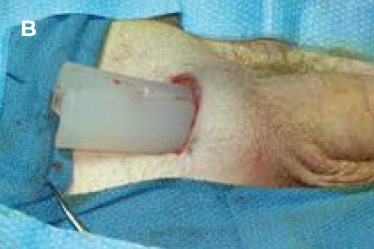
They are made up of soft, medical-grade silicone sleeves that can be placed under the skin (subcutaneous) and wrapped around your penis tissue to increase penile girth. - Inflatable penile prosthesis (IPP)
This device is the most commonly used type of penile implant. Inflatable penile implants inflate during erection and deflate when flaccid.
Three-piece inflatable implants have these components: a fluid reservoir, a pump with a release valve, and two inflatable cylinders.
To get an erection, you press the pump to move salt water from the reservoir into the cylinders.
Meanwhile, releasing a small valve in the scrotal area allows the fluid to flow back into the reservoir.
The two-piece version works similarly, but the reservoir is built into the pump itself. - Semirigid penile implant
Semirigid penile implants, also known as malleable penile prostheses, can be bent or straightened but can’t be repositioned.
These devices are generally positioned downward but can be turned upward during sex.
What enables malleable “rods” to change orientation is the central series of segments connected end-to-end via a spring.
Given the different materials used, penile prosthesis placement, and procedures for each type of penile implant, revision surgery isn’t one-size-fits-all.
The specific goals and surgical techniques may vary depending on the recommended device and the nature of the complications.
Dr. Solomon removes cosmetic and subcutaneous penile implants without the assistance of a urologist.
But he collaborates with a urology specialist when treating functional prosthetic implants used for erectile dysfunction. In most of these cases, he encourages patients to follow up with their original urologist.
For these complex procedures, entrusting your care to someone who lacks experience and expertise could do more harm than good.
As a double-board-certified male enhancement surgeon with over 30 years of experience in the industry, Dr. Solomon is uniquely qualified to correct a wide range of issues due to failed implants.
He specializes in correcting complications caused by trauma and previous surgeries, including scarring, penile curvature, fat graft issues, and failed implant removals.
Dr. Solomon’s expertise in these procedures has earned widespread recognition, with patients from all over the country and around the world seeking his help in reclaiming their manhood.
One patient’s story captures the precision and care Dr. Solomon brings to each procedure.
“I am happy…I had my [subcutaneous silicone penile] implant removed by Dr. Solomon…I had an implant inserted…and then foolishly had it replaced with a larger one when there were edges present…
Almost immediately, I found the southwest region of the implant (close to the base of my shaft on the left-hand side) to be somewhat loose and protrude from my shaft. I’m fortunate that it didn’t break through the skin, and intercourse was not a lot of fun for my poor wife due to the implant bump.
I knew it was inevitable that this unnatural contraption needed to be removed…I opted to give Dr. Mark Solomon a try….
He was very professional and frank during his consultation and advised me that my weakened sensation on the shaft could well be permanent (not simply due to the presence of the implant).
He said that these nerves along the shaft are too small for plastic surgeons to be aware of, and when inserting a foreign object (in my case, not once but twice) into the penis, the nerves will variably retain the same degree of sensitivity…
As he explained, the scar tissue would be necessary for filling in the vacuum left from the absence of the implant, and it would be through a hanging device that I could expect to regain the expected loss of length.
The procedure itself went off without a hitch…
I was placed on a regimen of Percocet, an antibiotic, and valium (to stifle night-time erections)…The pain was minor and manageable as long as I lay elevated in bed.
The next day, I had a follow-up with the doctor, who changed the dressing and instructed me to keep the penis wrapped in order to reduce the swelling.
He told me that he removed a part of the capsule that had formed around the penis, which would have retained liquid and been problematic.
He left another part of the capsule that had formed around a nerve that he didn’t want to disturb.
I was told that this would not work out to my benefit for permanent girth (to my disappointment, of course). Several days later, I returned to have my testicular drain removed and was instructed to pull on the penis for two 5-minute intervals each day for up to four weeks. At approximately four weeks, I could expect to begin using a hanging device…
For some reason, I feel calm about the situation, knowing that hanging will likely get me back to where I was length-wise. I’m optimistic that my hanging regime will take me beyond, hopefully over the six-inch mark.”
bostonman5555 (username) | Review from Phalloboards (an online forum for male enhancement-related topics)
Even the medical community recognizes Dr. Solomon as a leading voice in male aesthetic surgery.
He has presented his insights at national and international conferences and has published multiple research papers in reputable journals, including Plastic and Reconstructive Surgery and Aesthetic Surgery Journal.
Dr. Solomon also contributed to the development of the field with his editorial work on Aesthetic Surgery for the Male. This landmark textbook features one of the earliest academic reports on penis enlargement procedures.
With Dr. Solomon’s world-class expertise and experience in handling complex reoperations, revision surgery can be a real opportunity to finally get the outcome you were hoping for.
Are you ready to take a step toward newfound confidence? Call us at (310) 299-3553 and schedule a private consultation to explore your options.
Why Might Someone Need Penile Implant Revision Surgery?
You might need penile implant revision surgery when post-op dissatisfaction and complications outweigh your implant’s benefits (if any).
Here are some reasons to consider revision surgery:
- Dissatisfaction With the Outcome
If you’re unhappy with your penis’ appearance following a penile implant procedure, you might benefit from corrective surgery by an experienced specialist like Dr. Solomon. - Device Breakage
Penile implants, such as the silicone penile implants placed under the skin, can sometimes break apart inside the body.
This complication can be deeply unsettling.
One tragic case involves a man who received a free implant through a promo contest.
Five years later, he found out that the device had fractured, leaving loose pieces shifting beneath his skin.
If you’re facing something similar, know that you’re not alone—it’s not too late to take back control.
Dr. Solomon has handled complex cases like these, including implant breakage, and can help you move toward a safe, well-planned solution. - Infection
An outcomes analysis of over 200 cases indicates that infection is the second-leading reason for undergoing revision surgery.
While every surgical procedure carries some risk of infection, the rate for a popular silicone penile implant is relatively high, with about 3.2% of patients who’ve had it.
That’s three to four times higher than the 1% to 3% infection rate typically reported in breast implant procedures and other similar surgeries.
If you’ve noticed swelling, pain, or other signs of infection near your implant, consider seeking help from a specialist like Dr. Solomon.
During the operation, he ensures that the entire implant is removed to minimize the risk of infection and facilitate a smooth recovery. - Implant Erosion
In some cases, silicone penile implants have eroded through the skin, with parts of the device eventually becoming exposed.
The skin along the penile shaft is delicate, so placing a solid block of silicone beneath it can, in some cases, lead to pressure-related tissue damage over time. - Scar Tissue and Deformity
Like in other surgical treatments, scar tissue can develop after penile implant surgery.
However, the body’s response can go beyond routine healing.
Men have reported experiences of penis curvature or shortening as the scar tissue tightens around the implant. - Seroma
Some implants can trigger the development of seromas (pockets of fluid that accumulate beneath the skin near the surgical site).
This fluid buildup can be painful and emotionally draining and may lead to additional doctor visits or hospital stays, potentially driving up healthcare costs.
If not properly managed, a seroma can also cause wound infection and the formation of an abscess (a pocket of pus). - Anatomical Changes and Size Loss
Over time, or after certain complications, the erectile tissue of the penis (the corpora) can change.
Scar tissue, known as fibrosis, may form, reducing the tissue’s flexibility.
This often results in a noticeable loss of penile length, one of the most common concerns men express after a failed implant.
In such cases, revision surgery may be necessary to adjust the implant or restore lost size. - Chronic Pain
In 2025, the American Urological Association (AUA) released an analysis of post-market complications linked to a widely used silicone penile implant.
The study, which was published in The Journal of Urology (J Urol), showed that 9% of patients chose to have the device removed due to ongoing pain following implant surgery.
But beyond the numbers, personal accounts shared publicly revealed what that discomfort can feel like: sharp, stabbing pain during intimacy or even while showering.
One man described the experience as feeling like “a prisoner in [his] own body,” likely due to the implant pressing against his pubic bone.
If you’re dealing with this pain, know that you’re not alone, and you don’t have to endure it forever.
Dr. Solomon understands how deeply this kind of discomfort can affect your life. He and his team are here to help you find lasting relief and restore your sense of well-being. - Sensation Loss
One of the most troubling implant complications is loss of sensation in the head of the penis.
When a silicone implant is secured with mesh near this sensitive area, it can compress the nerves responsible for sensation.
Over time, that pressure may lead to reduced sensation or numbness. - Psychological Distress
When a penile implant procedure fails to meet your expectations, the emotional toll can be just as heavy as the physical one.
Some men experience regret, depression, or anxiety, and many feel too ashamed to talk about it, which can hinder them from getting the help they need.
In one heartbreaking case, a man became so overwhelmed after his implant failed and had to be removed that he attempted suicide.
Another doctor noted “the deep despair of men who can’t unring the bell”—men who desperately wish they could take the surgery back.
These stories reveal just how deeply a failed penile implant surgery can impact a man’s mental health, confidence, and sense of self. - Partner input
One patient said his wife began experiencing microtears during sex and was even considering surgery to widen the vaginal opening.
Sometimes, the impact of a failed or oversized implant isn’t limited to your own discomfort.
If your partner is in pain or struggling during intimacy, it can affect the relationship on every level. - Penile Curvature or Deformity
Men who also have Peyronie’s disease (scar tissue causing curvature) or who developed scar-related curvature after prior surgery may find that the implant did not fully straighten the penis.
In some cases, scar formation from a previous procedure can cause the penis to curve or dimple.
Dr. Solomon has extensive experience correcting these deformities from prior surgeries.
During revision, he may have to remove scar tissue or add procedures like grafting to straighten the penis. - Mechanical Failure
Some penile implants are mechanical devices, which means they can eventually wear down or malfunction.
Pumps may stop working, tubing can develop leaks, or cylinders might wear out.
A multicenter study published in The Journal of Sexual Medicine (J Sex Med) reported that most penile implant revisions were performed due to mechanical failure.
If your implant no longer gives you a reliable erection or deflates on its own, there’s a good chance a mechanical issue is to blame. - Visible Tubing or High-Riding Pump Issues
In some cases, the functional implant’s tubing can be felt or even be visibly noticeable under the skin, which may raise cosmetic concerns.
Another common issue is a high-riding pump, where the saline pump from an inflatable implant sits too close to the surface of the scrotum or shifts toward the groin.
This positioning can be uncomfortable. It can also make the pump more challenging to access or become visibly noticeable. - Floppy Glans
Sometimes, the implant doesn’t give enough support to the head of the penis (glans), causing it to droop downward, upward, or sideways.
This complication may occur when the cylinders fail to reach the tip or when the tissue at the glans is too loose.
Floppy glans is relatively uncommon, but when it does occur, the impact can be significant, often resulting in painful intercourse, difficulty with penetration, and an appearance that many patients find troubling.
Every revision case comes with its own set of challenges, which is why Dr. Solomon doesn’t rely on cookie-cutter solutions.
His individualized approach considers the details of your previous surgery, the specific complications you’re facing, and the results you’re hoping to achieve.
No matter how complex the situation, Dr. Solomon designs the treatment plan around you.
He also helps you understand what to watch out for, like ongoing pain, swelling, fever, or signs of device failure, so that you can act early and accordingly.
This level of attentive care is what Dr. Solomon’s revision surgery offers: The best chance to fix what went wrong and help you reclaim your body.
Can a Penile Implant Be Redone?
It’s not unusual to need a second procedure following a cosmetic or functional penile implant surgery.
For example, while inflatable penile prostheses (IPP), such as the AMS 700 or Coloplast Titan, are claimed to be durable, they don’t last a lifetime.
In fact, approximately 25% to 30% of men who’ve had these implants will need a revision after 10 years due to mechanical failure or malfunction.
But here’s the good news: revision surgery is entirely possible in many cases, and seasoned specialists like Dr. Solomon routinely perform these cosmetic penile implant revisions with high success rates.
If you want to remove your subcutaneous silicone penile implant, know that help is within reach. You can restore your confidence with the help of Dr. Solomon.
A leading expert in penile enhancement surgery, he has spent over a decade helping men recover from failed penile implant procedures.
Dr. Solomon’s implant revision procedure usually involves:
- Complete removal of the device: For subcutaneous silicone penile implants, this process includes the removal of the synthetic mesh attaching the device to the penis
- Removing scar tissue: Clearing scar formation around the affected nerve to help restore feeling in the head of the penis
During revision surgery, Dr. Solomon may also:
- Release the penile ligaments to restore lost length.
- Revise scar tissue to improve overall appearance.
- Use dermal grafts, such as AlloDerm™, to enhance girth, shape, or alignment.
Remember, penile implant revision surgery doesn’t just aim to remove a device but also aims to preserve, restore, or rebuild in the process.
As such, this specialized procedure requires skill, creativity, and a profound understanding of the anatomy involved. That’s where Dr. Solomon makes a difference.
Many men come to him after being told nothing more could be done or after disappointing results elsewhere.
Using advanced techniques such as dermal grafting and total explantation (removal of the implant), Dr. Solomon tailors every step to each patient’s specific needs.
The decision to move forward depends on several key factors: your symptoms, your goals, the current state of the implant, and the outcome of the initial surgery.
Dr. Solomon weighs all of these considerations carefully before creating a plan that’s grounded in reality and built for the best possible outcome.
What Happens When Penile Implants Fail?
Penile implant surgery might be elective or cosmetic for some, but it’s still a serious operation.
Like any procedure involving foreign devices and sensitive anatomy, penile implants carry real risks, many of which get glossed over in flashy marketing.
If you’re considering this surgery, here are some of the risks and complications associated with an unsuccessful penile implant procedure:
- Surgical Complications
- Seroma (fluid accumulation)
- Hematoma (the formation of a pool of mostly clotted blood caused by a broken blood vessel)
- Reservoir herniation (occurs almost exclusively in penoscrotal placements)
- Floppy glans (loss of rigidity in the penis head)
- Loss of sensation in the head of the penis
- Urethral injury
- Device erosion or extrusion
- Implant wearing through the surrounding tissue or emerging through the skin
- May be characterized by dysuria (painful urination) and mild pain near the site of erosion
- Mechanical Failure
- Fluid leakage
- Cylinder tears
- Pump failure
- Postoperative infection
- Caused by bacterial contamination during or after surgery
- Signs of infection may include redness, swelling, and hot skin
When a penile implant fails, the issue is often layered and involves scar tissue, nerve involvement, or cosmetic distortion.
That’s why Dr. Solomon approaches each case with full-spectrum care, beginning with a thorough evaluation that includes:
- Medical clearance from your primary doctor to confirm surgical fitness
- Blood tests and possibly an EKG or electrocardiogram (especially for patients over 50)
- Assessment of symptoms, which may include scar tissue, fluid buildup, tenderness, visible components, and device positioning
How Do You Know if You Need a Penile Implant Revision?
Many men live with ongoing complications simply because they’re not sure what’s normal or because other healthcare providers have dismissed them.
If you’re experiencing any of the following, it’s time to talk to a specialist like Dr. Solomon:
- Ongoing pain or discomfort
- A pump that doesn’t inflate or won’t hold firmness
- Loss of rigidity during intercourse
- New curvature or shape distortion
- Redness, swelling, or signs of infection
- Visible components, such as a high-riding pump or tubing under the skin
- Dissatisfaction with the penis’ appearance or function
- A floppy glans
- Noticeable loss of length compared to before the implant
Catching these issues early matters, as they often worsen over time and become more challenging to fix.
With Dr. Solomon’s expertise in complex revisions, you’ll get a thorough evaluation and a custom plan built around your case.
What Happens During Penile Implant Revision Surgery With Dr. Mark Solomon?
When you see Dr. Mark Solomon for a penile implant revision, you won’t get a one-size-fits-all approach.
You’ll get a surgical plan built around your unique anatomy, symptoms, and goals.
This personalized approach is anchored on sensible surgical judgment, well-planned corrective steps, and a clear understanding of what went wrong the first time.
Here’s what Dr. Solomon and his team commit to doing to keep you safe, comfortable, and fully supported throughout your surgery:
Preoperative Evaluation
Each person’s case is unique. From the outset, Dr. Solomon will ensure that you receive personalized care tailored to your specific needs. During your consultation, he will:
- Review your original surgery details, including the type of implant, surgeon, timing, and symptoms.
- Conduct a detailed physical exam to identify issues like implant displacement, scar tissue, or nerve compression.
- Discuss your aesthetic and functional goals, and set clear expectations.
Dr. Solomon doesn’t sugarcoat things. If a particular result isn’t realistic, he’ll tell you. If there’s a better option, he’ll walk you through it.
Schedule your consultation either in person at our Beverly Hills office or virtually to understand what revision surgery entails.
Intraoperative Care: What to Expect During Revision Surgery
Depending on your case, Dr. Solomon’s penile implant revision surgery may involve the following steps:
- Dr. Solomon will mark the surgical sites and take a few photos to help plan the incisions and record your starting point. Once that’s done, you’ll be brought into the operating room.
- As part of the surgical preparation, an IV (intravenous line) will be placed in your vein.
Then, under the care of our experienced anesthesiologist, you’ll receive anesthesia to keep you entirely comfortable and pain-free throughout the procedure. - During the actual removal surgery, Dr. Solomon will remove all components of the device.
- Dr. Solomon will also address any scar-related problems.
As a foreign object, a subcutaneous silicone implant can trigger a body response called a capsule.
While this response is normal, the formation of a capsule (scar tissue) can lead to complications that require surgical correction.
In some cases, the capsule can distort the shape of the penis or put pressure on the nerve that controls sensation in the glans. - If scar tissue is affecting sensation in the glans, Dr. Solomon will work to release the compressed nerve. This step involves carefully removing the surrounding scar tissue to relieve pressure and improve sensitivity.
The technical details can be complex, but you don’t need to absorb everything right away. Dr. Solomon is always ready to answer your questions and walk you through the process.
EXPERT CARE IN BEVERLY HILLS
Have Questions About This Procedure?
Dr. Solomon offers private, judgment-free consultations to help you understand your options.
Postoperative Care
Dr. Solomon’s care doesn’t end in the operating room.
In the days following your procedure, he’ll meet with you regularly to monitor your recovery.
Even after you’ve returned home, you’ll stay in close contact both in person and through email, to ensure everything stays on track.
Follow-up care is included and covers at least 12 months after surgery. Patients may also be seen at no charge beyond the first year if their concerns are related to their procedure.
How Does Dr. Mark Solomon Address Common Revision Challenges?
Revision surgeries often come with challenges that don’t typically arise during a first-time implant.
Thanks to his extensive experience, Dr. Solomon can identify and manage these complexities with precision.
Here are some of the most challenging issues and how they’re handled.
- Scarred erectile tissue (fibrosis)
Dr. Solomon can perform scar revision not only to improve the appearance of the penis but also to restore lost sensation.
He carefully removes scar tissue that may be compressing nerves, especially those affecting sensitivity in the glans (head of the penis). - Loss of length or girth
In some cases, Dr. Solomon may perform a suspensory ligament release to help restore lost length.
This technique frees the ligament that anchors the penis, allowing it to extend outward, often adding one to two inches.
After a silicone implant removal, it’s common for the penis to look deflated when soft or appear curved when erect. That’s where Dr. Solomon’s skill with dermal grafts like AlloDerm™ comes in.
These grafts can restore volume, improve shape, and bring back symmetry.
Dr. Solomon has deep experience using grafts to enhance both length and girth.
If it’s unsafe to place a graft immediately after removal, Dr. Solomon will take a staged approach.
He’ll remove the implant first, allowing time to heal, and then perform grafting once the tissue is ready. - Floppy glans
Dr. Solomon addresses this by evaluating underlying tissue tension and anatomical support.
He may perform structural reshaping, often alongside scar tissue release or implant removal, to restore alignment, firmness, and natural appearance at rest and during arousal. - Visible tubing
Dr. Solomon may correct visible tubing by removing the implant entirely.
How Are Reservoirs Managed During Revision Surgery?
In a three-piece inflatable penile implant, the reservoir holds saline when the device is deflated.
IPPs are usually placed deep in the retropubic space (behind the pubic bone), close to vital structures like the bowel or major blood vessels.
Managing the reservoir is a crucial part of revision surgery, particularly when infection is involved.
Leaving this component behind can lead to ongoing problems like recurring infections. The reservoir may also migrate to the abdomen if the implant was placed post-radical prostatectomy (surgical removal of the prostate).
Dr. Solomon follows a safety-first approach. If your functional implant is infected, he works with urology specialists to minimize risk and promote proper healing.
What Are the Risks and Complications of Penile Implant Revision Surgery?
Like any procedure, penile implant revision surgery comes with its share of risks. But often, those potentially harmful side effects result from what the implant has already done to the body.
For instance, if a silicone penile implant stays in for more than a few weeks, it can cause lasting changes to the appearance of the penis, even after the implant’s removal.
Potential risks associated with removal procedures include:
- Penile retraction or penis shortening
- Scarring beneath the skin of the penis
- Penis deformity or curvature
- Sensation loss in the head of the penis (glans)
How Can You Achieve the Best Outcomes and Lowest Infection Rates?
A successful penile implant revision requires well-planned and well-executed perioperative care.
Dr. Solomon follows best practices before, during, and after surgery to help ensure the best possible outcome with minimal risk.
He performs revision surgeries in an AAAHC-accredited facility.
This recognition from the Accreditation Association for Ambulatory Health Care (AAAHC) is a national benchmark for safety and quality in outpatient surgery.
We also go beyond standard protocols. Each operating room is equipped with advanced HEPA (high-efficiency particulate air) filtration, creating an ultra-clean environment that exceeds typical hospital standards.
These systems help reduce airborne particles and lower the risk of infection, giving you the safest possible setting for surgery.
At every step, your safety is built into the process.
If you’re ready for care designed with precision and protection in mind, schedule your consultation with Dr. Solomon today.
What Is Recovery Like After Penile Implant Revision Surgery?
Dr. Solomon knows that removing the implant is only the first step. Recovery, healing, and adjustment matter just as much as the procedure itself.
What happens after surgery? How long will it take before you feel like yourself again?
Here’s what to expect when it comes to healing, follow-up care, and your recovery timeline after penile implant removal:
- Recovery varies from person to person, depending on your body and the specifics of the procedure.
Most patients can return to work within two weeks.
You’ll usually be able to shower the day after surgery, but to ensure proper wound control, avoid activities like sex, swimming, or going to the beach until the incision has fully healed.
This waiting period typically takes three to four weeks. Complete recovery may take several months, depending on your case. - After your procedure, Dr. Solomon will walk you through a clear, step-by-step plan for post-op care.
For instance, if drainage tubes are placed, he’ll show you how to manage them. They’re usually removed within a few days.
The good news is that there’s no need to come back for stitch removal. Dr. Solomon uses dissolvable sutures that fade naturally as you heal. - For pain management, you may be prescribed pain medication and other drugs, such as antibiotics and diazepam (to ease discomfort from nocturnal erections).
- If you’re coming from out of town, we recommend staying nearby for a few days after your surgery. This allows Dr. Solomon to monitor your healing closely and guide you through the early stages of recovery.
- Removing a penile enhancement device isn’t a simple reset.
Your body naturally forms a scar tissue capsule around any foreign objects, such as a silicone penile implant.
In a retractable organ like the penis, that scar can affect shape, mobility, and length, causing the penis to curve, shorten, or stiffen.
After removal, the scar tissue may pull the penis inward to fill the space. Some men refer to this phase as the “mini-dick” or “dicklet” stage.
To prevent this, many surgeons recommend traction therapy. However, not all devices are user-friendly.
Some, like RestoreX, require daily use with clamps and rigid rods, which many patients find uncomfortable.
Dr. Solomon takes a gentler approach. He recommends a simple, weighted condom that lightly stretches the penis over time without the pain or hassle of traditional traction devices.
During recovery, it is also essential to monitor for potential complications, including increased pain at the surgical site, persistent swelling, and device malfunction.
If any of this feels overwhelming, don’t worry—you won’t face it alone.
Dr. Solomon offers a comprehensive care plan, guiding you through every stage—from your initial consultation and preoperative preparation to recovery and follow-up.
How Does Patient Satisfaction Compare After Revision Surgery?
If you’re facing complications from a previous penile implant, it’s easy to feel like revision surgery is just one more uncertain step in a long, exhausting journey to get things right.
But you’re here. You’re not giving up yet. And we want to tell you that your hope isn’t misplaced.
Many men come to us feeling discouraged and uncertain about what’s possible. But under Dr. Solomon’s care, their hopes transformed into fulfillment and satisfaction.
With a high success rate over many years of practice, Dr. Solomon’s penile revision procedures have helped hundreds of men regain comfort and confidence, often after years of setbacks.
Consider the case of a 51-year-old man who developed numbness in the glans after implant removal.
Dr. Solomon not only removed the device but also performed nerve decompression, gradually restoring sensation over the following months.
That patient later called to express his gratitude, sharing how the procedure had improved both his confidence and quality of life.
Another patient, 34, came in after losing length and developing curvature from a prior removal done elsewhere. Dr. Solomon corrected both, restoring symmetry and sexual function.
While patient privacy is always respected, it’s worth noting that several men Dr. Solomon has treated now share their experiences, often anonymously in forums or advocacy spaces, to help others realize that recovery is possible.
One such patient, “Bryan,” underwent removal and revision with Dr. Solomon.
He was so relieved by the outcome that he became a paid patient advocate, speaking with others facing similar challenges.
To support long-term results, Dr. Solomon includes a structured penile rehabilitation program as part of aftercare.
This helps reduce scarring, preserve appearance, and support functional recovery after implant removal.
The result? Patient satisfaction—not just clinical success—extends into their relationships, sex lives, and sense of self.
And that’s Dr. Solomon’s goal: to fix the problem and restore the life around it.
Ready to get it right? Schedule your consultation with Dr. Solomon and take the first step toward lasting results you can trust.
Is Penile Implant Revision Surgery Right for You?
Choosing to undergo another surgery, especially a penile implant revision, is a life-impacting decision.
Dr. Solomon understands the weight of this matter. He’s not just here to offer the procedure—he’s here to help you see the whole picture.
He’ll provide you with clear, honest guidance on what to consider before moving forward, how your partner might factor into the decision, and how Dr. Solomon will support you throughout the process.
You’ll also find out when it’s worth getting a second opinion and what your options really are if you no longer want implants:
- Expectations
The first step in deciding is understanding what revision surgery can and cannot do. Dr. Solomon will clearly explain likely (realistic) outcomes in terms of function, appearance, and sensation. - Risks vs. Benefits
As with other major life decisions, you should compare the potential benefits of revision surgery against its risks.
For instance, if you have diabetes or a spinal cord injury, you may be at an increased risk of infection.
Dr. Solomon takes the time to detail these potential complications with honesty and compassion.
Including your partner in the consultation can help you make a decision that supports your long-term well-being and satisfaction. - Comorbidities and Overall Health
Before undergoing penile prosthesis surgery, it’s essential to evaluate underlying health conditions like diabetes, heart disease, or a weakened immune system.
Consider your lifestyle habits when making the decision.
A 2024 study published in the International Journal of Impotence Research (Int J Impot Res) found that active smokers have a higher risk of requiring IPP revision.
For patients with serious medical concerns, implant removal without replacement may be recommended. - Alternative Options
Given the risks of penile implants, you might ask, “Is there a safer, more effective way to increase size?”
The short answer is yes. Dr. Solomon prefers dermal grafting, a reliable approach to surgical penile enlargement.
This method avoids the use of synthetic or foreign materials.
Instead, Dr. Solomon uses a dermal graft, such as AlloDerm™, to increase penile girth.
AlloDerm™ is an acellular (organic and lacking cells) graft made from donated human skin. This dermal graft integrates with your tissue over time.
As it becomes part of your body, it helps enhance size in a way that’s both natural and medically sound.
Dr. Solomon recognizes that a failed implant doesn’t just affect the body—it can shake a man’s confidence, trust, and sense of self.
That’s why he assumes the roles of both a competent surgeon and a compassionate guide. He’ll acknowledge your frustration and then shift the focus toward realistic solutions.
His message is clear: “Yes, this was a setback, but the story isn’t over yet. Here’s how we move forward.”
Are you dealing with implant-related complications? Schedule a private consultation with Dr. Solomon to explore your options.
What Should You Ask Dr. Mark Solomon Before Surgery?
If you’re considering penile implant revision surgery, asking the right questions can help you feel more confident and informed.
Here are several questions to discuss with Dr. Solomon before your procedure:
- “What surgical treatments are available for my specific device type?”
- “Am I a good candidate for revision surgery?”
- “What functional and cosmetic results can I realistically expect?”
- “What are the risks and benefits of penile implant revision surgery?”
- “What steps do you take to minimize the risk of infection during and after surgery?”
- “How long will recovery take, and what should I expect? How often will I need follow-up visits?”
- “Will my partner and I need to make any lifestyle adjustments before or after surgery?”
- “How much will the revision procedure cost, and will insurance cover any part of it?”
At our Beverly Hills, Los Angeles practice, Dr. Solomon and his team take the time to address all your concerns.
We make it a priority to listen, explain your options clearly, and treat your concerns with respect—because your comfort, health, and confidence always come first.
If you want to delve deeper into Dr. Solomon’s approach and work on penile enhancement and revision surgery, here are some resources to explore:
- Solomon, M. P. (2022). Commentary on Motivations and Psychological Characteristics of Men Seeking Penile Girth Augmentation. Aesthetic Surgery Journal, 42(11), 1316–1317. https://doi.org/10.1093/asj/sjac138
- Solomon, M. P. (2020). Discussion: Aesthetic Augmentation Phalloplasty: A Systematic Review of Techniques and Outcomes. Plastic & Reconstructive Surgery, 146(5), 1007–1010. https://doi.org/10.1097/prs.0000000000007314
- Solomon, M. P. (2023). Commentary on: The Efficacy of Injection Penile Girth Enhancement as an Option for Small Penis Syndrome Management. Aesthetic Surgery Journal, 44(1), 92–94. https://doi.org/10.1093/asj/sjad168
To locate all papers and commentaries by Dr. Mark P. Solomon, you can search PubMed or Google Scholar by typing in “Mark P Solomon” as the author query.
If you’re dealing with complications or regret after a penile implant, you’re not alone—and you don’t have to stay stuck. The sooner you get help, the sooner you can start feeling like yourself again.
Call (310) 299-3553 to schedule a private consultation with Dr. Mark Solomon and take the first step toward comfort, confidence, and moving forward.
Frequently Asked Questions About Penile Implant Revision Surgery
1. What is a reservoir?
Inflatable penile implants consist of three main components: cylinders, a reservoir, and a pump.
In penile implants, the reservoir is a sac-like component that contains fluid. The pump transfers this liquid to the cylinder, depending on the desired level of erection.
During penile implant surgery, the surgeon typically places the reservoir under the abdominal wall.
2. Does insurance cover the penile implant revision procedure?
Surgical procedures aimed purely at enhancing penis length or girth are considered cosmetic and usually aren’t covered by insurance.
That said, if you’re experiencing issues from a prior implant, fat transfer, filler, or hidden penis, you may be eligible for coverage based on medical necessity.
Dr. Solomon is an out-of-network provider for all insurance plans, but our team will gladly verify your benefits after your consultation.
This insurance evaluation is included in your consultation fee and designed to help you understand your options upfront.
3. Do you treat erectile dysfunction?
Dr. Solomon focuses on restoring both appearance and function through advanced revision and reconstructive surgery.
He doesn’t perform penile prosthesis implantation to treat erectile dysfunction himself.
That said, whenever a patient comes to Dr. Solomon with concerns about an implant for erectile dysfunction, he collaborates closely with a urologist to ensure optimal cosmetic and functional outcomes.
4. How much does penile implant revision surgery cost?
We don’t provide pricing details by email. A consultation with Dr. Solomon is necessary to determine the exact cost since the approach—and whether one or more procedures are needed—depends entirely on your goals and anatomy.
Only Dr. Solomon can recommend the most appropriate plan for you. If you have any other questions, don’t hesitate to contact our office directly.
5. What is the typical recovery period for penile implant revision surgery?
Postoperative recovery varies for each individual, but most men can return to work within two weeks.
You can typically shower the day after surgery. Still, it’s best to avoid swimming or engaging in beach activities until the incision is fully healed, which usually takes around three to four weeks.
6. Will I undergo only one penile implant revision operation?
Depending on your goals and safety considerations, multiple procedures may be necessary. In some cases, multiple surgeries may be required to achieve the desired results.
Getting Started with Penile Revision Surgery
In the majority of cases, genital enhancement surgery provides good results. Unfortunately, there are individuals who have experienced poor results. Penile revision surgery is performed to correct any issues caused by the genital enhancement surgery. Technology has triggered improvements in both peri-operative care and anesthesia. This had made this type of surgery more effective and much safer. Dr. Mark P. Solomon has many years of experience in penile revision surgery, and he will help you work toward a procedure plan that is effective for your needs.
When a man is left with poor results from their surgery, penile revision surgery becomes necessary. The most common issues resulting from this surgery are internal and external scarring, curvatures, distorted grafts, fat nodules, and failed implants. All of these issues can be corrected with penile revision surgery. The ultimate goal of the revision surgery is to provide the best possible functionality and appearance. Due to the extremely large selection of options for penis enhancement, it is critical to have the surgery performed by a surgeon with both skill and experience in correcting the issues caused by all of these different enhancements.
This includes procedures performed to enhance the girth and the length, the different fillers available both past and present, fat grafts and issues concerning the implant used to enlarge the penis such as any infections caused by the device and exposure. In some cases, the previous surgery has caused distortion or curvature due to the formation of scars. Body contouring and surgery for weight loss can cause the need for scrotal surgery and a revision of circumcision. It is important for the man to be able to trust that the surgeon understands their needs and goals, will respect their privacy and always act in a professional manner.
During the initial consultation, it is important to ask any questions regarding the previous surgery, the potential solutions for correction and to gain a full understanding of penile revision surgery.
Revision surgery requires flexibility and creativity because the issues of each individual are unique. The correct solution will be customized by Dr. Solomon. After the surgery has been performed, the progress of the individual should be monitored closely to ensure the goals of the surgery have been achieved. In most cases, Dr. Solomon will see the individual for several days after the procedure. A follow-up appointment will also be established. If you are interested in having penile revision surgery at the office of Mark P. Solomon, MD to correct an issue caused by a previous surgery, feel free to visit one of our offices in Beverly Hills or Bala Cynwyd. Contact us today to schedule your consultation!