
Calf Augmentation Surgery
Well-proportioned calves complete the physique. But for many men, genetics make it nearly impossible to build the lower leg definition they want, no matter how hard they train. Board-certified plastic surgeon Mark P. Solomon, M.D., F.A.C.S., offers calf augmentation using custom-selected silicone implants to create natural-looking fullness and proportion, with over 35 years of experience in male aesthetic surgery.
Dr. Solomon is an exceptional surgeon and a true professional. From the initial consultation through surgery and post-op follow-ups, he was clear, thoughtful, and incredibly attentive. He took the time to walk me through every detail of the procedure and made sure I felt fully comfortable going into surgery.







What Is Calf Augmentation Surgery?
Calf augmentation surgery uses solid silicone implants to add volume, shape, and definition to the lower legs. The procedure is designed for men (and women) who want fuller, more proportional calves that cannot be achieved through exercise alone.
Procedure Overview
The calf muscles (gastrocnemius) are one of the most genetically determined muscle groups in the body. Some men have naturally thin or underdeveloped calves regardless of how consistently they train. Others may have asymmetry from injury, prior surgery, or a congenital condition. In either case, the result is a lower body that looks disproportionate to the rest of the physique.
Calf augmentation provides a reliable, lasting solution. Dr. Solomon takes an individualized approach to calf augmentation, carefully measuring each patient’s legs and selecting implant dimensions that produce a natural, athletic result proportional to the patient’s frame.
* Sources: https://pubmed.ncbi.nlm.nih.gov/35965213/
https://pubmed.ncbi.nlm.nih.gov/30868304/
Implant Selection and Placement
Calf implants are made of soft, solid silicone (not gel or liquid-filled) and are available in a range of sizes and shapes to match individual anatomy and aesthetic goals. During your consultation, Dr. Solomon measures your legs and evaluates your calf anatomy to determine the appropriate implant dimensions.
The procedure is performed under general anesthesia. Dr. Solomon makes a small incision in the natural crease behind the knee, where scarring is well-concealed. Through this incision, a pocket is carefully created between the skin and the underlying calf muscle (subfascial placement). The implant is positioned within this pocket and the surrounding tissue is sculpted for a smooth, natural contour. Incisions are closed with dissolving sutures. The procedure typically takes approximately one hour per leg.
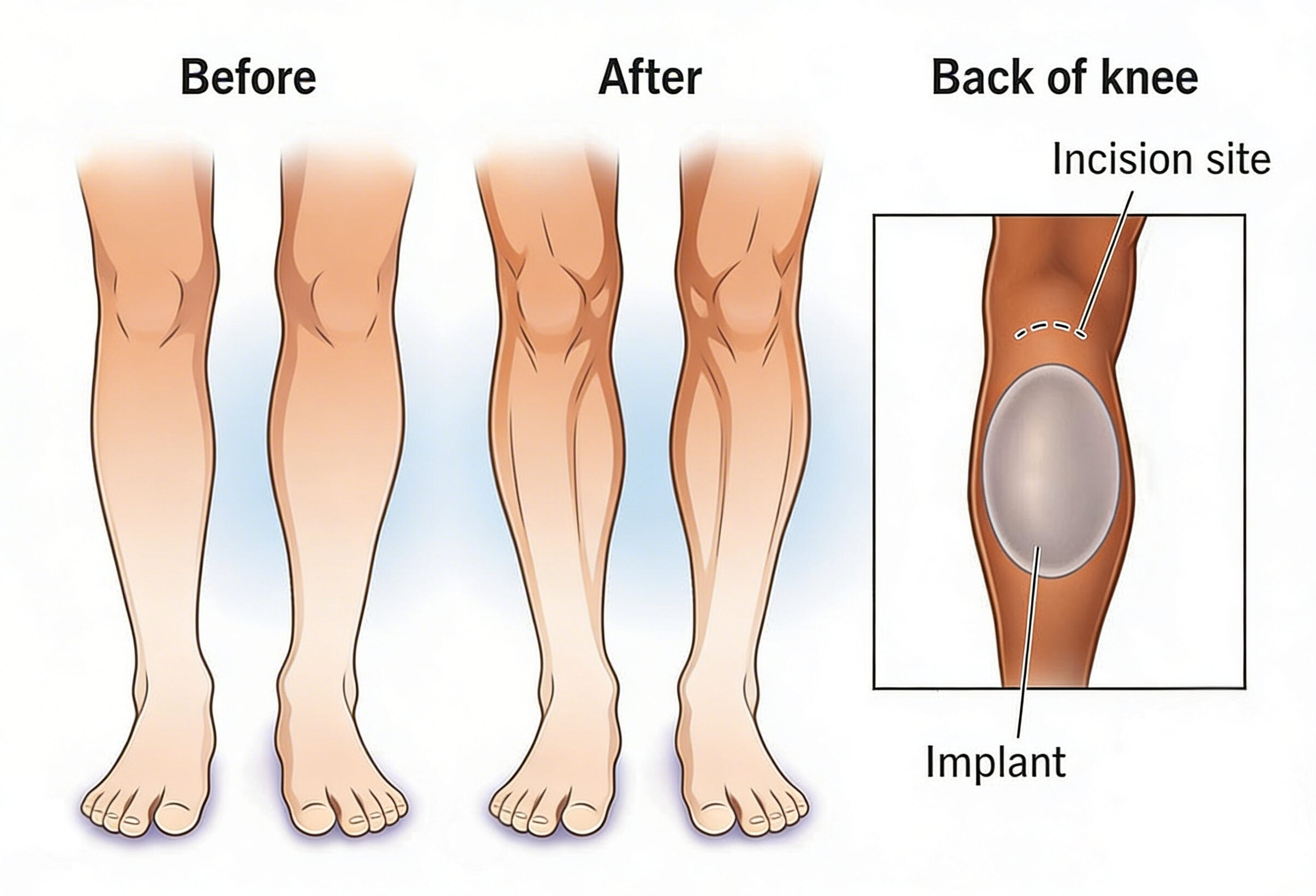
Medial and Lateral Augmentation
The calf has two main visible segments: the medial (inner) head and the lateral (outer) head of the gastrocnemius muscle. Many patients benefit from augmentation of the medial calf alone, which provides the most noticeable improvement in fullness and shape. For patients with very thin calves or significant asymmetry, both medial and lateral implants may be placed to achieve a balanced, proportional result. Dr. Solomon will recommend the approach that best matches your anatomy and goals.
Reconstructive Applications
Calf augmentation is not exclusively a cosmetic procedure. Patients who have experienced muscle wasting from polio, clubfoot, injury, nerve damage, or other medical conditions may benefit from calf implants to restore a more symmetrical, natural-looking lower leg contour. Dr. Solomon’s dual training in cosmetic and reconstructive plastic surgery allows him to address both aesthetic and functional concerns.
Combining Procedures
Calf augmentation can be performed as a standalone procedure or combined with other treatments depending on the patient’s goals:
Pectoral Augmentation:
For men looking to enhance both chest and lower body proportion in a single surgical session.
Liposuction
Liposuction of the ankles, knees, or thighs may be combined with calf implants to further refine lower leg contour.
Other Male Aesthetic Procedures
Calf augmentation can be coordinated with gynecomastia surgery, penile enhancement, or other procedures as part of a comprehensive treatment plan.
A personal consultation with Dr. Solomon is required to determine which procedures are appropriate for your individual needs and goals.
Benefits & Risks of Calf Augmentation Surgery
Calf augmentation can produce a dramatic improvement in lower leg proportion and overall physique balance. As with any surgical procedure, it involves both potential benefits and risks. Dr. Solomon believes that informed patients make the best decisions.
Benefits
- Fuller, more defined calves: Implants add volume and shape to the lower legs, creating a more athletic, proportional appearance that exercise could not achieve
- Natural-looking results: Solid silicone implants placed beneath the fascia produce a result that looks and feels like well-developed muscle, not an obvious augmentation
- Correction of asymmetry: For men with calf asymmetry from injury, congenital conditions, or muscle wasting, implants can restore a more balanced, symmetrical lower leg
- Hidden incision: The incision is placed in the natural crease behind the knee, where scarring is well-concealed and typically fades significantly over time
- Permanent results: Calf implants are designed to be a long-lasting solution; unlike injectable fillers, they do not require repeat treatments
- Improved confidence: Many patients report feeling more comfortable in shorts, at the gym, and in athletic settings following calf augmentation
Risks & Considerations
- Surgical risks: As with any surgery, there is a risk of infection, bleeding, adverse reaction to anesthesia, and delayed wound healing
- Implant-related risks: Although uncommon, risks specific to calf implants include implant displacement, capsular contracture (scar tissue tightening around the implant), and, rarely, the need for implant removal or replacement
- Scarring: The incision behind the knee is discreet, but all surgery produces scars; individual healing and scar visibility vary
- Swelling and bruising: Post-operative swelling in the lower legs is expected and may take several weeks to fully resolve; final results become apparent over time
- Temporary tightness: The calves may feel tight or stiff during the first several weeks as the tissue stretches to accommodate the implant; this gradually improves
- Walking adjustment: Most patients walk with a modified gait for the first one to two weeks as the legs adjust; this is temporary and resolves as healing progresses
Individual results vary. All surgical procedures carry inherent risks. A personal consultation with Dr. Solomon is required to determine whether a procedure is appropriate for your goals and to discuss your specific risk profile.
A special thanks to Dr. Solomon and his staff for putting up with my endless questions both before and after surgery. I just had my post op photos taken and am even more pleased than I thought when comparing with my before photos. I recommend Dr. Solomon to anyone looking for a talented surgeon who will be completely honest with you and that is there for you every step of the way!! Thank you, Dr. Solomon!!

Am I a Candidate for Calf Augmentation?
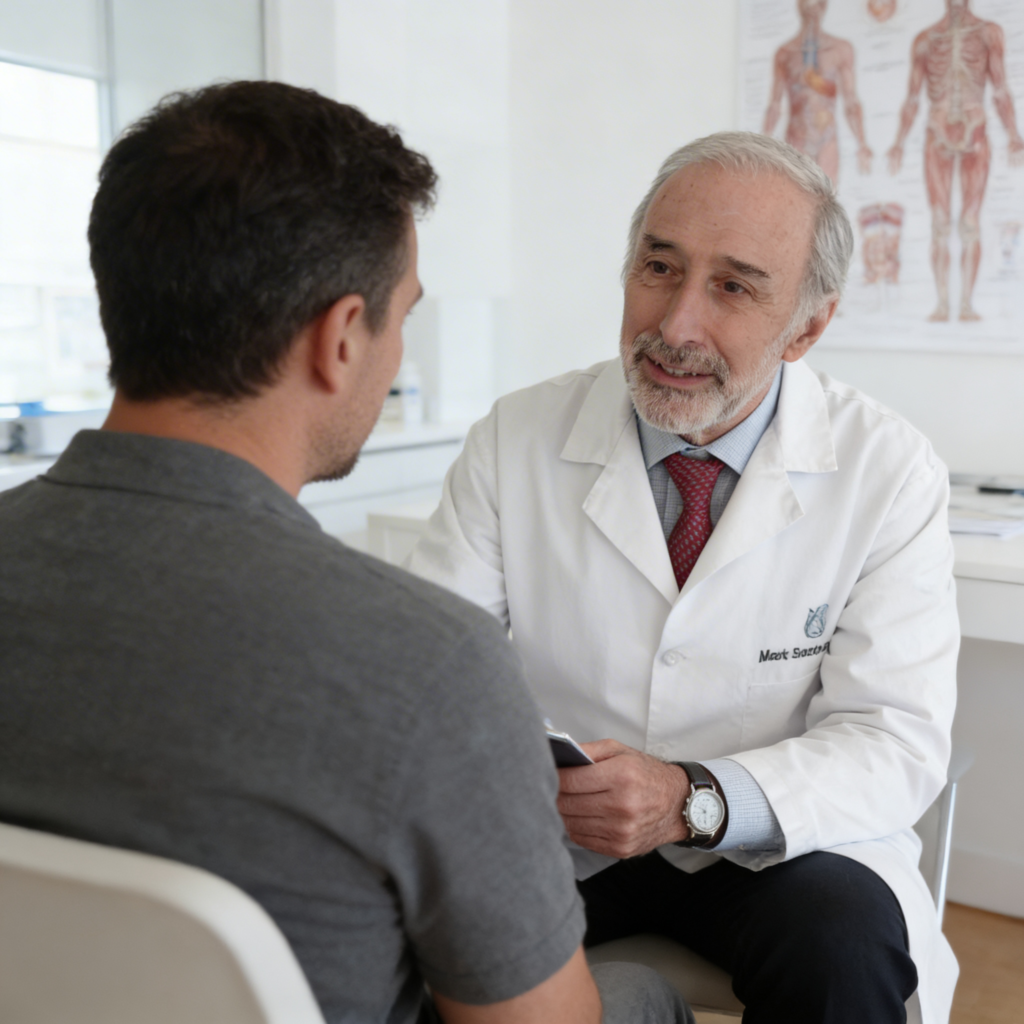
Candidacy for calf augmentation surgery is determined during a private consultation with Dr. Solomon. In general, good candidates include men who:
- Have naturally thin or underdeveloped calves that do not respond to exercise
- Want fuller, more proportional lower legs to balance their overall physique
- Have calf asymmetry from injury, surgery, congenital conditions, or muscle wasting (polio, clubfoot, nerve damage)
- Are at or near a stable, healthy body weight
- Are in good overall health and are medically cleared for surgery
- Are non-smokers (smoking significantly increases the risk of complications and must be stopped well in advance of surgery)
- Have realistic expectations about what calf implants can achieve
Calf augmentation is not a substitute for fitness. The procedure is designed for men who are already reasonably fit but have a genetic limitation in calf development, or who have a medical or structural condition that affects lower leg symmetry. During your consultation, Dr. Solomon will evaluate your leg anatomy, discuss your goals, and recommend the implant size and placement approach most likely to produce a natural, balanced result.
Recovery & What to Expect
Calf augmentation is performed on an outpatient basis under general anesthesia. Recovery requires patience and adherence to a specific protocol to ensure the implants settle properly and the legs heal well.
Recovery Starts with Rest and Elevation
Patients should plan to rest with their legs elevated for the first several days following surgery. Swelling, tightness, and soreness in the calves are normal and expected. Walking will be limited and modified during this period; most patients walk with a stiff or careful gait for the first one to two weeks. Dr. Solomon provides prescriptions for pain management and detailed post-operative instructions. A specialized stretching regimen may be recommended to help the legs adjust to the implants.
Light Activity & Early Healing Phase
Most men are able to return to desk work and light daily activities within one to two weeks, depending on comfort level. Walking improves gradually as the tissue adjusts to the implants. Swelling continues to decrease. Legs should remain elevated when sitting or lying down to minimize swelling during this phase.
Gradual Return to Activity
Light exercise, such as walking and easy cycling, may be resumed after approximately four weeks with Dr. Solomon's clearance. Strenuous lower-body exercise, running, and heavy calf-loading activities are typically restricted for six weeks or longer. Dr. Solomon will clear you for full activity based on your individual healing progress.
Settling Into Your New Normal
Final calf contour becomes fully apparent over the first three to six months as swelling resolves and the implant settles into its permanent position beneath the fascia. The results of calf augmentation are long-lasting. Dr. Solomon schedules follow-up appointments to monitor your healing, assess symmetry, and ensure your recovery stays on track.
Recovery timelines are general guidelines. Individual healing varies based on the procedure performed, overall health, and adherence to post-operative instructions.
Real Results. Real Patients
Every outcome reflects a customized surgical plan developed specifically for that patient’s anatomy and goals. For men with gynecomastia, the difference between before and after is often dramatic. We are proud to share these images with the permission of the patients themselves, who hope their experience will give others the confidence to seek the care they deserve.
Mark P. Solomon, M.D., F.A.C.S.
Dr. Mark P. Solomon is a double board-certified plastic surgeon, certified by both the American Board of Plastic Surgery and the American Board of Surgery, with over 35 years of experience specializing in male aesthetic and reconstructive surgery.
He earned his medical degree from New York University School of Medicine and completed general surgery training at the Hospital of the University of Pennsylvania and Thomas Jefferson University Hospital. His plastic surgery residency was at the Hospital of the University of Pennsylvania, with additional fellowship training in craniofacial surgery at Hôpital Necker-Enfants Malades in Paris, France.
Dr. Solomon served as Chief of the Division of Plastic Surgery at both the Medical College of Pennsylvania Hospital and Hahnemann University Hospital. He has held academic appointments ranging from Clinical Assistant Professor to Associate Professor of Surgery at the University of Pennsylvania, Hahnemann University, and Drexel University College of Medicine. He is co-editor of a foundational textbook on male cosmetic surgery and has authored over 35 peer-reviewed articles in medical journals.
He is a Fellow of the American College of Surgeons (FACS) and a member of the American Society of Plastic Surgeons and the American Society for Aesthetic Plastic Surgery.
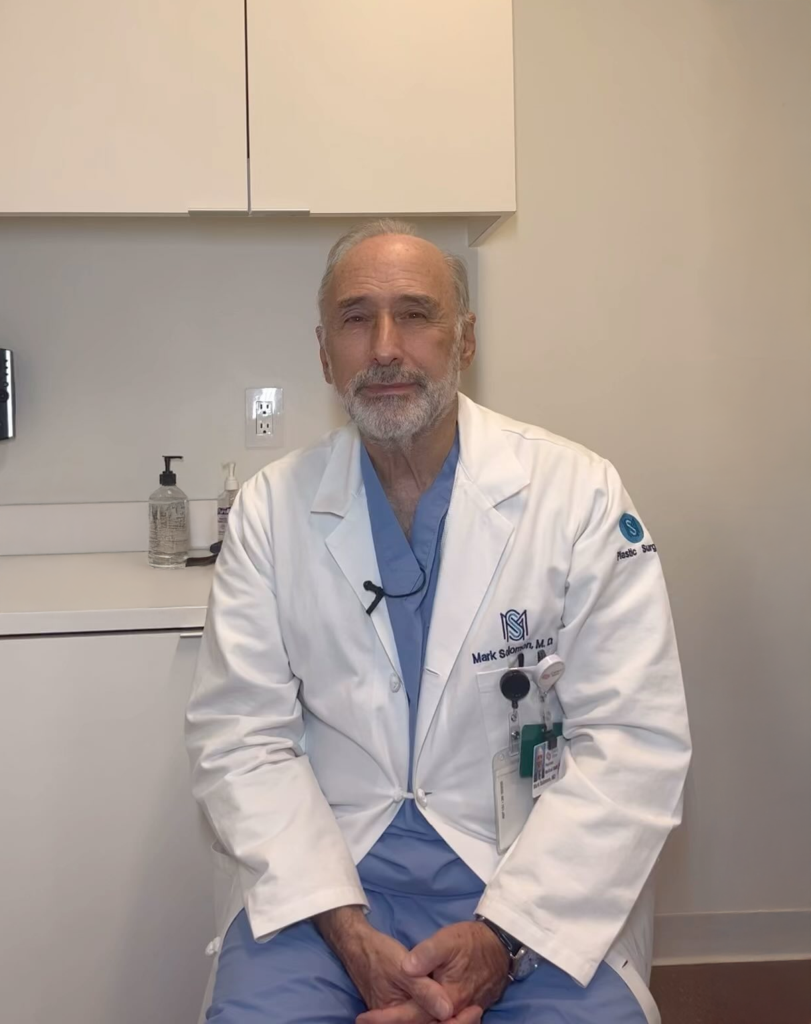
“Every patient deserves individualized care built on honest assessment, innovative technique, and a genuine commitment to the best possible outcome.”
Why Choose Dr. Solomon for Calf Augmentation

Unmatched Experience
With over 35 years of experience in cosmetic and reconstructive plastic surgery, Dr. Solomon brings the precision required to create accurate implant pockets, achieve symmetrical placement, and produce results that look like natural, athletic calves rather than an obvious implant.

Double Board-Certified Surgeon
Certified by both the American Board of Plastic Surgery and the American Board of Surgery. Fellow of the American College of Surgeons (FACS). These credentials reflect the highest standard of surgical training and ongoing competency.

Male Aesthetic Surgery Specialist
Dr. Solomon's practice is built around the male patient. With over three decades of focused experience in male aesthetic and reconstructive surgery, he understands the proportions, anatomy, and aesthetic goals that define natural-looking results for men. Calf augmentation requires a surgeon who can evaluate the entire lower body in context and select implants that complement the patient's frame, not just add volume.

Individualized Approach
Every patient receives a personalized surgical plan based on their leg anatomy, body proportions, and goals. Dr. Solomon carefully measures each leg, selects the right implant size and shape, and recommends medial, lateral, or combined placement based on what will produce the most natural result for your specific build.

Cosmetic and Reconstructive Expertise
Calf augmentation serves both cosmetic patients (men who want fuller calves for physique balance) and reconstructive patients (men with muscle wasting from polio, clubfoot, injury, or nerve damage). Dr. Solomon's dual training in both disciplines allows him to treat the full range of patients who seek this procedure.

Privacy & Professionalism
Dr. Solomon and his team understand the personal nature of aesthetic surgery for men. Every consultation and procedure is conducted with complete discretion. Patients traveling from out of state or internationally receive dedicated support through the medical tourism program.
Frequently Asked Questions
Calf implants are made of soft, solid silicone. They are not filled with liquid or gel and cannot rupture or leak. They are specifically designed for the lower leg and are available in a range of sizes and shapes to match individual anatomy and goals.
Dr. Solomon places the incision in the natural crease behind the knee (the popliteal fold), where scarring is well-hidden. The scar fades significantly over time and is not visible from the front or side of the leg.
Yes. The implant is placed beneath the fascia overlying the calf muscle, which provides natural tissue coverage and allows the implant to blend with the surrounding anatomy. The result is designed to look like a well-developed, athletic calf rather than an obvious augmentation. Dr. Solomon selects implant size based on your specific leg measurements and body proportions to ensure a balanced appearance.
Yes. Calf augmentation is commonly used to restore symmetry in patients with muscle wasting from polio, clubfoot, injury, nerve damage, or other conditions that affect the lower leg. Dr. Solomon evaluates each case individually and can customize implant selection for each leg to achieve the most balanced result.
Yes. Once fully healed, most patients can return to their full exercise routine, including running, cycling, leg presses, and calf raises. Lower-body exercise is restricted for approximately six weeks following surgery to allow the implant pocket to heal properly. Dr. Solomon will provide a detailed timeline for returning to activity based on your healing.
Calf implants are designed to be a long-lasting, permanent solution. Because they are made of solid silicone, there is no risk of rupture or deflation. In most cases, the implants do not need to be replaced unless a complication occurs or the patient desires a different size.
The medial implant augments the inner head of the calf muscle, which is the larger, more visible portion of the calf. The lateral implant augments the outer head. Many patients achieve an excellent result with medial implants alone. For patients with very thin calves or notable asymmetry, both medial and lateral implants may be recommended. Dr. Solomon will advise which approach is best for your anatomy.
Most patients return to desk work within one to two weeks. Walking is modified for the first one to two weeks. Light exercise can typically resume after four weeks, with strenuous lower-body activity restricted for six weeks or longer. Final calf contour develops over three to six months as swelling resolves and the implant settles. Dr. Solomon provides detailed post-operative guidance and monitors your recovery closely.
The cost depends on the specific surgical plan, including whether medial implants alone or both medial and lateral implants are placed, and whether additional procedures are combined. Pricing is discussed during your consultation after Dr. Solomon evaluates your individual needs. The practice offers financing through CareCredit, accepts major credit cards, and can arrange customized payment plans.
Absolutely. Dr. Solomon and his team treat every consultation with complete discretion and professionalism. Virtual consultations are available for patients who prefer an initial conversation from home.
Life-Changing Results
Traveling to Beverly Hills for Calf Augmentation
Dr. Solomon’s practice welcomes patients from across the United States and around the world. Many patients travel specifically to Beverly Hills for Dr. Solomon’s specialized expertise in male aesthetic surgery.
The practice offers comprehensive medical tourism support to make your experience as seamless as possible:

Virtual Consultations
Meet with Dr. Solomon remotely to discuss your goals and develop a surgical plan before you travel

Travel Coordination
Assistance with hotel reservations near the Beverly Hills office and local transportation arrangements. Surgical patients traveling to Beverly Hills receive complimentary airport pickup and drop-off.

In-hotel Recovery Care
Dr. Solomon personally visits out-of-town patients at their hotel each day following surgery until they are cleared to travel home.
Flexible Scheduling
The practice works with your travel timeline to schedule your consultation, procedure, and follow-up appointments efficiently.

Follow-Up Planning
Dr. Solomon coordinates post-operative care with your local physician when appropriate, and virtual follow-up appointments are available for ongoing monitoring.
Get In Touch
Dr. Mark Solomon is a board-certified plastic surgeon with expertise in penile revision surgery based in Beverly Hills, California. To discuss your specific concerns or learn more about our treatment options, please fill out the form or call our office at (310) 299-3553 to schedule a consultation.
Please Note: Pricing varies with each patient’s individual issue, so a consultation is required before providing any cost information. As a note, we are unable to provide cost information via email. Dr. Solomon’s consultation fee is $350. Dr. Solomon is generally the best fit for patients with PPO/commercial insurance or who are paying out of pocket.
* indicates required fields
“I am beyond happy with the results of my surgery. I feel well.”